
The psychology of light: comfort, behaviour and spatial perception
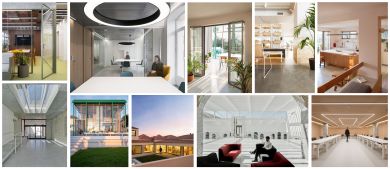
How light influences behaviour, comfort and the perception of space
Light shapes more than what we see: it defines how we feel, how we move and how we perceive the world around us. In a poorly lit space, even the most beautiful environments can feel oppressive or disorienting; when properly designed, lighting transforms any space into a place of comfort and harmony.

Light and human behaviour
Light directly influences emotions and daily actions. Cool and intense lighting tends to stimulate alertness and concentration, making it ideal for offices and workspaces; warm and diffused lighting, on the other hand, promotes relaxation and social interaction, making it more suitable for living rooms and bedrooms.

Studies show that prolonged exposure to inadequate lighting can increase fatigue, irritability and even disrupt sleep, while balanced lighting helps improve mood and productivity. This is why restaurants often use warmer lighting to create intimate atmospheres, while luxury stores rely on directional lighting to guide attention and highlight specific products.

Visual comfort and well-being
Comfort depends not only on light intensity, but also on its quality and distribution. Excessive contrasts create discomfort and visual fatigue; deep shadows may convey insecurity; direct glare causes tension and strain.
A good lighting strategy combines general lighting (uniform), task lighting (functional) and ambient lighting (decorative), always taking into account the materials, textures and colours of the space. Adjustable systems, such as dimmers and different colour temperatures, allow environments to adapt to different times of the day and to the needs of those using them.

Perception of space and the psychology of light
Light radically changes the scale and feeling of a space. High ceilings appear more spacious with indirect upward lighting; small rooms gain depth through lateral lighting that creates soft shadows. Warm tones tend to visually bring elements closer, while cooler tones create a sense of distance and openness.
In architecture, these effects are used strategically: evenly lit corridors feel more welcoming; staircases with support lighting convey safety; showcases with dramatic lighting immediately attract attention. Light is not neutral — it shapes atmospheres and influences the way we experience each space even before we move through it.

How to apply it in everyday life
Both in homes and offices, a few simple rules can make a significant difference:
Layers of light: combining general, task and ambient lighting increases the versatility of the space.
Colour temperature: 2700K–3000K for relaxing environments; 3500K–4000K for activity and concentration.
Uniform distribution: avoid single light points that create overly dark areas.
Individual control: dimmers and presence sensors increase comfort and efficiency.
Controlled contrast: create smooth transitions between illuminated areas and shadows.
Why this matters
Light is not merely functional: it is a silent language capable of communicating tranquillity, energy, comfort or safety. When thoughtfully designed, it transforms ordinary spaces into more balanced and pleasant experiences, improves well-being and naturally influences behaviour.
In a world where we spend much of our time indoors, learning how to use light correctly is not a luxury, but a necessity for living better. A well-lit space does not simply look more beautiful: it makes us feel more comfortable, more present and more connected to the environment around us. Because the spaces we inhabit are not neutral: they influence our behaviour, our comfort and even the way we experience each moment.