
The influence of Gestalt theory on artificial lighting
The influence of Gestalt theory on artificial lighting
We decided to draw a parallel between Gestalt theory and artificial lighting because we recognise that there is a very useful relationship between the two concepts. We know that a lighting designer, architect or engineer may never have come into contact with this theory, as Gestalt is part of the field of psychology. However, we believe that it is at the intersection of different disciplines that the best innovations and improvements occur.
When we analysed this connection, we realised that the way people perceive light and space can be explained by basic Gestalt principles. That's why we think it's important to share this reflection and explore how this theory can contribute to the creation of more effective and harmonious lighting projects.
Gestalt Principles and Lighting
Applying Gestalt principles to artificial lighting can be an excellent starting point for creating more harmonious, comfortable and functional environments. However, each project has its own characteristics and different approaches can be explored. Let's look at some of the possible relationships between this theory and lighting design:
1. Proximity Principle
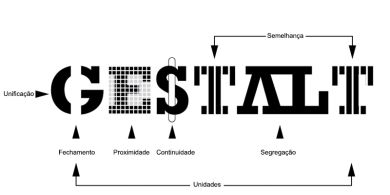
This principle suggests that elements placed close together are perceived as a group. In lighting, this can be exploited in the arrangement of luminaires to create coherent visual patterns. For example, a balanced distribution of light sources can avoid abrupt contrasts and visual discomfort, especially in large spaces such as offices or corridors.
2. Principle of Similarity
Similar objects tend to be seen as belonging to the same group. In lighting, this concept can inspire the choice of light sources with similar colour temperature and intensity in the same environment, creating a more uniform visual experience. However, deliberately varying these elements can also create interesting effects, depending on the intended purpose.
3. Principle of Continuity
Perception is naturally guided by flowing lines and patterns. In lighting, this principle can be used to guide the eye through a room. Recessed LED profiles, for example, can help create a sense of movement and fluidity. However, other strategies such as spot or focused lighting can be just as effective, depending on the intention of the project.
4. Figure-Bottom Principle
This concept defines how we differentiate a main element from the background. In lighting, this effect can be achieved by creating contrasts between light and shadow to highlight specific objects or areas. This technique is widely used in museums and galleries, for example. However, too much contrast can lead to visual fatigue, so each situation needs to be analysed using pre-defined criteria.
5. Closing Principle
The mind tends to complete unfinished shapes to create a coherent image. In lighting, this effect can be exploited in a number of ways, such as indirect or concealed lighting, which suggests contours without the need for visible physical structures. However, this approach is not a hard and fast rule and can be combined with other techniques to create different atmospheres.
The Psychology of Light and Well-Being
In addition to visual perception, lighting has a direct impact on people's emotional and physiological state. Studies show that colour temperature and light intensity affect circadian rhythms, productivity and even mood. Taking human perception into account in lighting design can help to create more comfortable and functional environments.
Applying Gestalt to artificial lighting does not establish a set of rigid rules, but rather a set of principles that can guide lighting design. By understanding how perception works, designers and architects can create innovative solutions that promote wellbeing and efficiency in environments.
Conclusion
Gestalt theory provides an excellent starting point for exploring new approaches to artificial lighting, balancing aesthetics and functionality. However, each project has specific needs and may benefit from different solutions. The important thing is to understand how visual perception can be used to create more comfortable, efficient and harmonious spaces.