
Portugal Day: How Lighting Has Shaped the Evolution of Portuguese Cities
.jpg "pictures of Guimarães, Porto and Lisbon")
On June 10th, Portugal celebrates its history, culture, and the identity that has been shaped over centuries. The date marks the death of Luís de Camões in 1580, author of Os Lusíadas, a work that continues to embody the spirit of a nation defined by discovery, adaptation, and the ability to look beyond the horizon.
Throughout its history, Portugal has undergone countless transformations. Cities have expanded, architecture has evolved, lifestyles have changed, and new technologies have reshaped the way we experience spaces. Among all these changes, there is one discreet yet fundamental element that has accompanied this evolution: light.
Long before modern lighting systems existed, the way Portuguese cities were illuminated influenced daily life, safety, and the way public spaces were used. In many ways, the history of lighting reflects the evolution of the country itself.
When the Night Belonged to Darkness
For much of Portugal’s history, urban life depended almost entirely on natural light. After sunset, streets, squares, and pathways were plunged into darkness, illuminated only by candles, lanterns, or small torches.
In historic cities such as Lisbon, Porto, Coimbra, and Guimarães, nighttime movement was limited, and many activities ended as daylight faded. Existing lighting served a primarily practical purpose, focusing on important buildings, strategic locations, or areas with higher levels of activity.
Nighttime was experienced in a very different way from what we know today.
The Arrival of Public Lighting
As cities expanded and economic activity increased, the need for more effective lighting systems became evident.
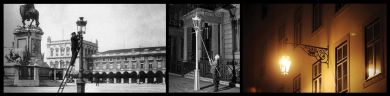
During the 19th century, gas lamps began transforming the urban environment. Streets became safer, routes more accessible, and public spaces remained active for longer periods.
Later, electrification brought an even deeper transformation. Lighting ceased to be merely a functional necessity and began to directly influence how cities were planned and experienced.
For the first time, urban life could extend far beyond sunset.
Light as an Element of Urban Identity
Throughout the 20th century, lighting began to play an increasingly important role in enhancing Portuguese cities.
Historic monuments, squares, bridges, and iconic buildings started to be illuminated strategically, allowing cultural heritage to remain visible and appreciated during the night.
Today, it is difficult to imagine places such as Porto’s historic centre, Lisbon’s waterfront, the medieval castles scattered across the country, or the central squares of our cities without the presence of light.
More than simply allowing us to see, lighting helps tell stories. It highlights architectural details, reinforces the identity of spaces, and contributes to preserving collective memory.
Light in Portuguese Traditions
The relationship between Portugal and light is also deeply rooted in its traditions.
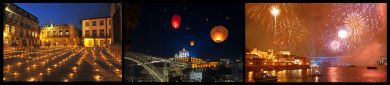
From candles used in religious celebrations to the festive illuminations that accompany popular events, light has long symbolised gathering, celebration, and community.
The traditional festivities that are such an important part of Portuguese culture transform streets and squares through lighting, creating environments that encourage social interaction and strengthen a sense of belonging.
Over the centuries, light has become an integral part of how the Portuguese experience and celebrate their spaces.
The Future of Portuguese Cities
Today, urban lighting faces new challenges. Energy efficiency, sustainability, the reduction of light pollution, and the integration of smart technologies are becoming increasingly important.
Portuguese cities have been adopting LED solutions, intelligent management systems, and more environmentally responsible approaches. The goal is no longer simply to provide more light, but to provide better light.
The future lies in solutions capable of balancing safety, comfort, efficiency, and environmental responsibility, creating more human-centred and sustainable urban spaces.
Lighting the Future Without Forgetting the Past
The evolution of lighting mirrors the evolution of Portugal itself. From the earliest lanterns and oil lamps to today’s advanced technological solutions, light has always played a role in the way we build, use, and value our spaces.
On this Portugal Day, it is worth remembering that a nation’s identity is also shaped by the details that influence everyday life. Lighting is one of those elements.
Discreet yet essential, it continues to contribute to safer, more welcoming, and more inspiring cities, helping preserve the heritage we have inherited while illuminating the path towards the future.
At Tromilux, we believe that every lighting project is an opportunity to enhance spaces, respect their context, and improve the way people experience architecture and urban environments. Because lighting is also about contributing to the Portugal of tomorrow.