
Common Interior Lighting Mistakes: What Still Goes Wrong and How to Fix It
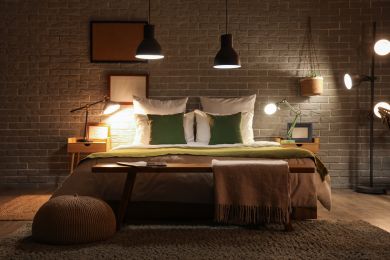
Lighting is one of the elements that most influences the way we experience a space and, at the same time, one of the most underestimated aspects of a project. It is still frequently treated as a decorative detail or as a decision to be made only at the end of construction, when in reality it should be considered from the very first stages of the design process.
Well-planned lighting improves visual comfort, makes spaces easier to use, enhances architecture and can contribute to the well-being of those who use them. On the other hand, inadequate lighting can cause visual fatigue, discomfort and make everyday tasks more difficult.
Artificial light has allowed us to extend our days far beyond sunset, bringing a major transformation in the way we live and work. However, it remains important to understand that it does not replace natural light and that the way we illuminate our spaces influences far more than just what we see.
Despite advances in lighting technology, many mistakes continue to be repeated, compromising comfort, functionality and the overall quality of environments. Understanding them is the first step towards creating more balanced and pleasant spaces.
1. Thinking Lighting Is Only for Decoration
One of the most common mistakes is considering lighting only at the end of a project, as if it were merely a decorative element.
In reality, light is a design tool. It defines circulation paths, enhances materials, highlights volumes and influences the way we perceive architecture.
When lighting is left until the final stages, the result is often improvised solutions that are inefficient and difficult to integrate.
More than decoration, light helps organize a space.
2. Relying on a Single Light Source
Even today, it is common to find rooms illuminated by only one central luminaire.
This approach creates a visually flat environment, with areas that are overly bright and others left in shadow, reducing comfort and the perception of depth within the space.
Instead of relying on a single light source, it is preferable to distribute lighting through different luminaires adapted to the various functions of the environment.
3. Ignoring the Different Layers of Lighting
A good lighting design rarely depends on a single source of light.
It typically combines three distinct layers: general lighting, task lighting and accent or decorative lighting.
General lighting provides the foundation of the space. Task lighting addresses specific needs such as cooking, working or reading. Accent lighting highlights architectural features, materials or decorative objects.
When one of these layers is missing, the space loses balance and functionality.
4. Choosing Colour Temperature Without Considering How the Space Will Be Used
Colour temperature directly influences the atmosphere of an environment.
Light that is too cool can make a residential space feel unwelcoming, while excessively warm light can make tasks requiring concentration more difficult.
Beyond aesthetics, colour temperature also affects colour perception and can interfere with our biological rhythm, particularly when very cool light is used at night.
The choice should be based on the intended use of each space rather than personal preference alone.
5. Failing to Make Proper Use of Natural Light
Natural light remains one of the greatest allies of comfort and environmental quality.
Whenever possible, it should be maximized and complemented by artificial lighting. However, it is also important to control direct sunlight to avoid glare and excessive heat gain.
The goal is to achieve a balance between both, adapting the lighting strategy to the characteristics of each space.
6. Ignoring Glare and Reflections
A brightly lit space is not necessarily a comfortable one.
Glare caused by poorly positioned luminaires or reflections from shiny surfaces can lead to visual fatigue, reduced concentration and prolonged discomfort.
A good lighting layout, combined with suitable optics and proper luminaire positioning, significantly reduces these issues.
7. Choosing Luminaires Without Considering the Scale of the Space
Proportion is also an important part of good lighting design.
A luminaire that is too small may lose its visual presence, while one that is too large can dominate the room.
The selection should take into account the dimensions of the space, ceiling height, furniture and the intended function of the luminaire itself.
8. Lighting Without Considering the Function of Each Area
Not all spaces require the same type of lighting.
A kitchen demands good visibility over work surfaces, an office requires comfortable lighting to reduce visual fatigue, and a bedroom benefits from softer, more relaxing light.
When every room receives exactly the same lighting solution, both comfort and functionality are compromised.
9. Forgetting That Lighting Also Affects People
Lighting does not only transform spaces. It also influences the people who use them.
Today we know that exposure to light affects the circadian rhythm, which regulates sleep cycles, alertness and various physiological processes.
Although artificial light is essential in modern life, its use should be conscious and considered. Light intensity, duration of exposure and colour temperature can all influence visual comfort and well-being throughout the day.
10. Choosing Luminaires Based Solely on Design
Design is important, but it should not be the only selection criterion.
A visually attractive luminaire may not provide good light distribution or offer the technical characteristics required for its intended purpose.
Parameters such as the Colour Rendering Index (CRI), beam angle, luminous efficacy, colour temperature and glare control are just as important as aesthetics.
A good luminaire is one that successfully combines technical performance, visual comfort and architectural integration.
Conclusion
Most interior lighting mistakes are not caused by poor-quality luminaires, but rather by a lack of planning and understanding of how light affects both spaces and people.
Good lighting does not mean installing more luminaires or producing more light. It means understanding the needs of each environment, respecting its users and finding the right balance between visual comfort, functionality, energy efficiency and architectural integration.
As knowledge of the impact of lighting on well-being and spatial quality continues to grow, it becomes increasingly clear that lighting should not be treated as a last-minute decision, but as an essential part of any project.
Because a well-lit space is not simply a space where we can see better. It is a space where we can live better.